What Causes Cracks and Chips in Fiberglass Tubs & Showers?
What Causes Cracks and Chips in Fiberglass Tubs & Showers?
Fiberglass tubs and showers are built to last — but over time, almost every homeowner notices something: a small chip near the drain, a hairline crack along the wall, or a dull, spidery surface where it used to shine. These aren’t just cosmetic issues. Left untreated, they can lead to water damage, mold, and costly structural repairs.
Why Fiberglass Is Vulnerable
Fiberglass tubs and showers are made by layering resin and glass fibers, then coating the surface with a gel coat — a smooth, hard finish that protects the underlying material. It looks solid, but that gel coat is surprisingly thin, typically just a few millimeters. Once it’s breached, water infiltrates the layers beneath, and the real damage begins.
The material is lightweight and flexible by design — which is great for installation, but means it can flex, shift, and stress over years of use in ways that more rigid materials like porcelain or acrylic don’t.
A small crack today is a waterlogged subfloor tomorrow. Fiberglass damage almost never stays small on its own.
6 Common Causes of Cracks & Chips
1. Poor Installation & Inadequate Support Without a solid, level base beneath it, fiberglass flexes every time weight is applied — causing stress fractures over time. This is one of the most overlooked causes, because the damage doesn’t show up until months or even years after installation.
2. Impact Damage Dropped shampoo bottles, razors, or tools can chip or crack the gel coat instantly. Heavy impacts can fracture the underlying fibers too. The area around the drain is especially vulnerable since it takes the most daily punishment.
3. Temperature Extremes Repeated cycles of hot water and cold air cause the material to expand and contract. Over time, this constant movement weakens the gel coat and creates hairline cracks — especially in bathrooms with poor ventilation or in colder climates.
4. Harsh Cleaning Products Abrasive scrubbers and bleach-heavy cleaners feel like they’re doing a thorough job, but they’re quietly eroding the gel coat with every use. Once the surface becomes thin and brittle, chipping and cracking follow.
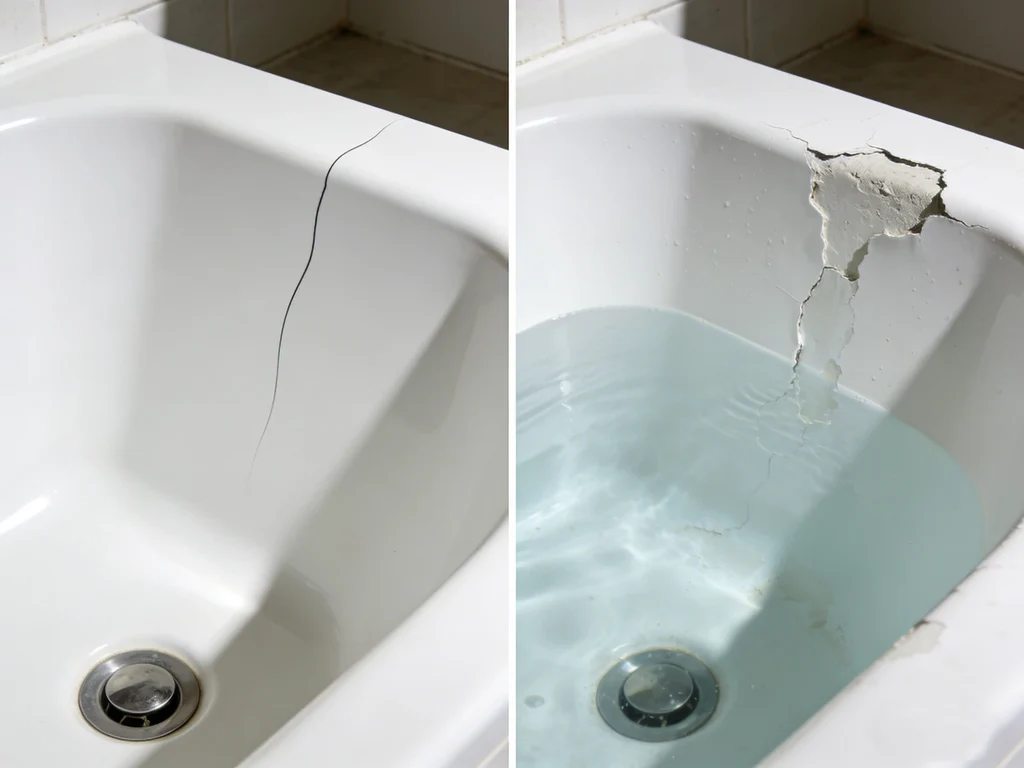
5. Water Infiltration This is where small problems become big ones. Once water gets beneath the surface through even a tiny crack, it softens the substrate underneath and causes the damage to spread — fast. What started as a hairline fracture can become a soft, spongy floor section within months.
6. Age & Normal Wear Over 10–15 years, even well-maintained fiberglass loses its elasticity and protective coating. Older tubs and showers are simply more vulnerable, and routine wear accelerates once the gel coat starts to thin.
Warning Signs You Shouldn’t Ignore
Many homeowners put off repairs because the damage looks minor. But fiberglass deterioration follows a predictable pattern — small problems escalate quickly once water gets involved. Here’s what to watch for:
- Spider cracks — Fine, web-like lines radiating from a central point. Usually a sign of structural flex or impact stress beneath the surface.
- Chips near the drain — This area takes the most impact and is typically the first to fail. Even small chips here can allow water under the surface.
- Soft spots or flexing — If the floor of your tub flexes noticeably when you step on it, the substrate beneath may already be compromised.
- Discoloration or yellowing — UV exposure and chemical damage break down the gel coat, leading to visible staining that signals thinning protection.
- Musty smell or mold around the surround — Often a sign that water has been traveling beneath the surface for some time.
Important: Water that infiltrates through a crack in your fiberglass tub or shower doesn’t just stay in the bathroom. It can travel into subfloor joists, drywall, and the rooms below — leading to mold infestations and structural repairs that cost far more than a simple surface restoration.
Can You Fix It Yourself — Or Do You Need a Pro?
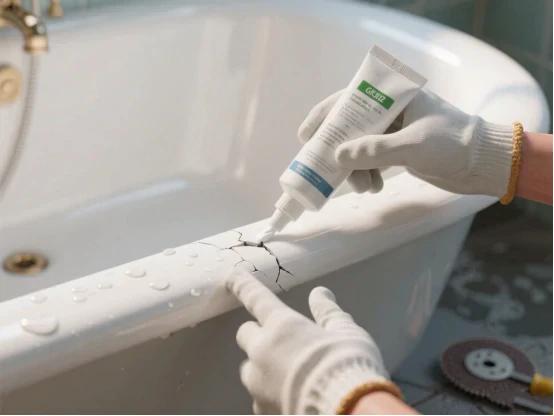
Small, surface-level chips in an otherwise solid tub can sometimes be patched with DIY fiberglass repair kits — but these repairs are tricky. Matching the color, achieving a smooth finish, and ensuring the repair bonds correctly all require skill and the right materials. A bad DIY job can actually make the surface harder to restore later.
If you’re seeing any of the following, professional refinishing or restoration is the right call:
- Cracks longer than 2 inches
- Multiple cracks or widespread spider cracking
- Any soft spots or flex in the floor
- Signs of water damage or mold around the tub
A specialist can assess the underlying damage, properly repair the structural layers, and restore the surface to like-new condition — often at a fraction of the cost of a full replacement.
Not Sure How Bad the Damage Is?
Don’t wait until a small crack becomes a major repair bill. Get a free, no-obligation assessment from our restoration specialists. We’ll tell you honestly whether a repair, refinish, or replacement is the right move — and give you a clear, upfront quote.